
How Ultra-Low Latency AI Real-Time Translation Works
This article analyzes the streaming principles and business use cases of overcoming interpretation and translation latency issues during live events using 0.6-second ultra-low latency AI technology.
- Have you ever seen a perfectly prepared global conference turn awkward when international attendees force a laugh at the speaker’s joke—five seconds late?
- To prevent live broadcast mishaps caused by interpretation delays and mistranslations, ultra-low-latency AI technology is gaining attention for processing the entire workflow—from speech recognition to translation and multilingual delivery—in under 0.6 seconds.
- We explore the technology behind a premium live experience that keeps audiences worldwide perfectly synchronized with the on-site event, without expensive simultaneous interpretation booths.

Thousands of people have gathered for a global product launch. Strolling confidently across the stage, the keynote speaker delivers an unexpected, witty joke. The local audience immediately bursts into laughter, while an unusual silence hangs over the section where international attendees are listening through interpretation receivers.
After five long, awkward seconds, the translation finally reaches them, prompting a few self-conscious laughs. In that moment, the room’s vibrant energy dissipates into the gap created by interpretation latency.
At live events and broadcasts, audio latency is one of the greatest threats to audience engagement. Many companies have attempted to introduce real-time artificial intelligence (AI) to overcome it, only to hesitate when processing times proved too slow for on-site use. Recently, however, technology has emerged that breaks through this barrier, delivering ultra-low-latency AI simultaneous interpretation at around 0.6 seconds and setting a new standard for global events.

🚨 Five Seconds of Silence That Break the Momentum
There is a clear reason why conventional interpretation systems and first-generation AI translation tools struggled to gain acceptance in live broadcasting: streaming delays put audience reactions out of sync.
From the moment a speaker’s voice enters the microphone, it takes at least three to five seconds to pass through speech recognition (STT), the translation engine, and speech synthesis (TTS) before reaching the listener. In sports broadcasts, live commerce, and high-stakes product launches—where every second matters—this delay can seriously undermine broadcast quality.
Trying to accelerate the process by translating individual words creates another problem. In languages such as Korean and Japanese, where verbs typically come at the end of a sentence, this approach can produce serious mistranslations. Waiting for the complete sentence before translating, however, pushes latency back up. Adding legacy radio-frequency (RF) transmitters and receivers further complicates on-site operations, with signal interference becoming a greater concern as attendance grows.

⚡ The Data Pipeline Behind 0.6-Second Ultra-Low Latency
To overcome the limitations of physical hardware, next-generation AI solutions have fundamentally redesigned how data is processed at the software level.
The key is chunk-based parallel processing that does not wait for an entire sentence to end. The speaker’s voice is divided into the smallest meaningful segments, which are recognized in real time and translated predictively. Recognition, translation, and speech synthesis run concurrently across the pipeline rather than as a strictly sequential process. Combined with advanced audio/video synchronization technology, this keeps the speaker’s on-screen lip movements and multilingual audio aligned within a 0.6-second margin.
Instead of using a large, general-purpose language model as is, these solutions employ a customized, lightweight AI engine optimized for live interpretation. Before the event, the engine is trained on terminology specific to the relevant industry, such as IT, medicine, or gaming. This dramatically increases processing speed while maintaining translation accuracy at the level of a professional interpreter. Attendees simply scan an on-site QR code to access multilingual audio channels instantly on their smartphones via WebRTC, without installing a bulky app.

👏 3. Transforming Live Events Beyond the Limits of Machine Translation
This technical reliability is fundamentally changing how event planners and broadcast teams manage live operations.
Producers responsible for global livestreams on platforms such as YouTube have resolved the problem of overseas viewers leaving because translated subtitles and audio arrive after the corresponding visuals. With the host’s remarks and multilingual delivery occurring almost simultaneously, international viewers respond in live comments at the same moment as Korean viewers, preserving the energy that makes live broadcasting distinctive.
MICE planners managing large conferences have also been freed from outdated wireless receivers prone to interference. By adopting distributed streaming through attendees’ own smartphones and network connections, they eliminate long equipment rental queues and the complaints that accompany them. Valuable event staff can then be reassigned to more important responsibilities, such as guest relations and event planning.
📈 4. A Smarter Foundation for Successful Global Expansion
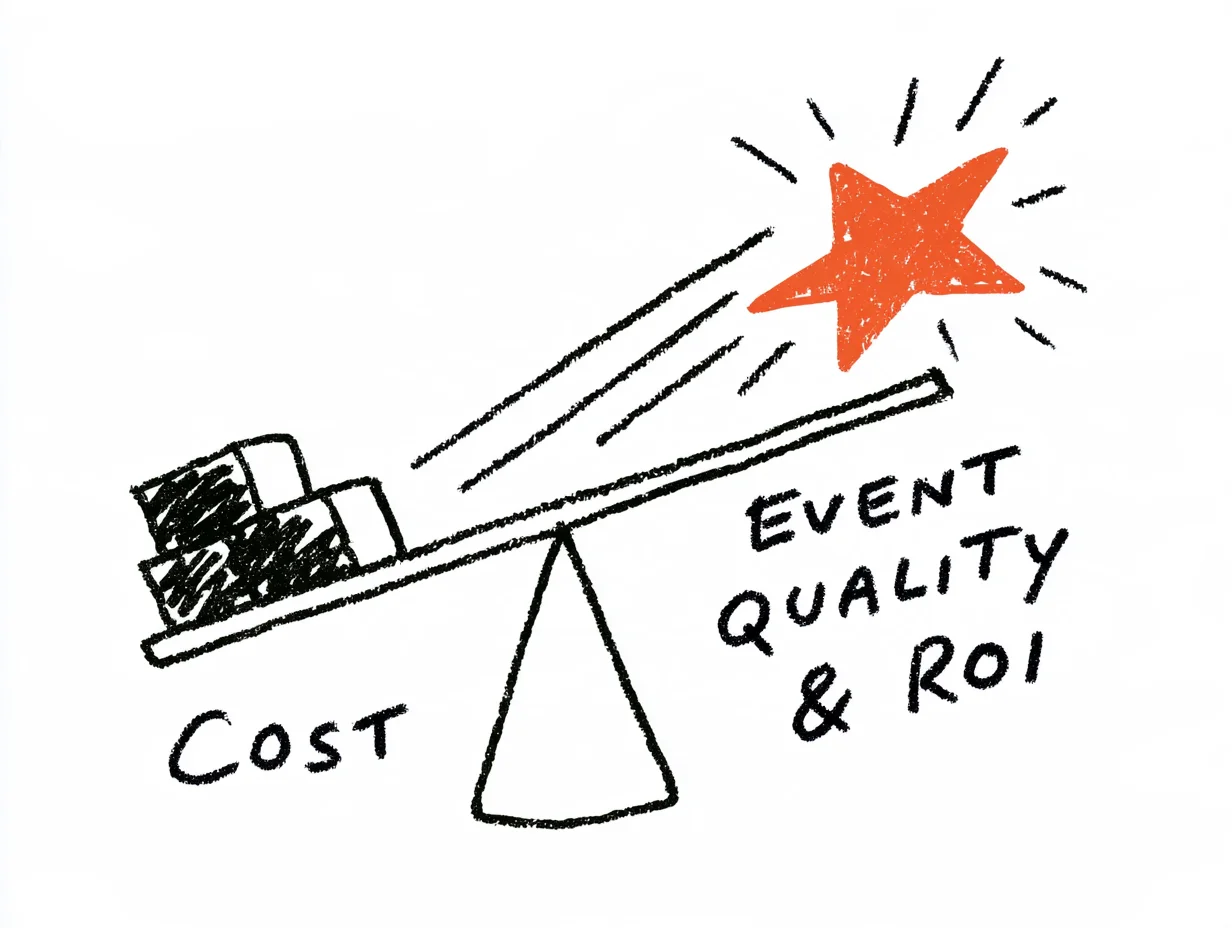
Replacing on-site infrastructure with intelligent cloud software delivers clear financial benefits for businesses and event organizers.
A single subscription license can replace the cost of installing simultaneous interpretation booths and renting expensive equipment, substantially reducing interpretation budgets. Those savings can then be reinvested in the quality of the event’s core content. Above all, this approach removes the physical constraints of an on-site venue and unlocks limitless scalability. Hundreds of attendees in the room and tens of thousands of international viewers online can receive the same quality of real-time translation and interpretation in 20 languages, without delay.
Just 0.6 seconds separate a speaker’s passionate words from the ears of an audience listening in another language. That brief interval is what allows participants worldwide to share the moment together, without even noticing the language barrier.
Have technical limitations forced you to compromise on the energy of your live events and the engagement of your audience? It is time to discover the ultra-low-latency streaming technology of Hudson Live, which keeps viewers worldwide perfectly in step with the event on-site. With a lightweight setup and seamless synchronization, Hudson Live is ready to support your next global stage.
💬 Looking for the ideal translation and interpretation solution for your company’s live broadcasts and global events? Move beyond systems plagued by delays and mistranslations. Experience Hudson Live, the next generation of AI live streaming that keeps your global audience perfectly synchronized with the action on-site.

Run your next event without booths or receivers
Tell us your event name, dates, expected headcount, and target languages, and our team will put together the plan that fits.