
Decoding the KBO Global Broadcast: The Traffic-Boosting Power of AI Live Interpretation
Based on LG U+'s KBO global dubbing case study, this article reveals a 3-STEP AI live interpretation setup designed to completely convey the commentators' explosive 'emotions' to viewers worldwide, moving beyond the simple delivery of game rules in multilingual broadcasts.
- The true thrill of a KBO broadcast lies in the caster's passionate, lung-busting "shouting." But what if this intense live atmosphere gets reduced to a single, dry line of English subtitles for overseas viewers? The very "electricity" that breathes life into baseball broadcasts completely vanishes.
- LG U+ (LGU+), which has recently been expanding its global KBO broadcasts, found itself in a deep dilemma trying to fully convey these emotions to international fans.
- Moving beyond simple subtitle translation, we introduce a new approach that vividly dubs the roaring stadium amps of Jamsil Baseball Stadium and the commentators' breathless excitement for fans worldwide.

"It's going! Over the fence! Bottom of the 9th, two outs—a dramatic, come-from-behind walk-off home run!"
The passionate broadcasting style unique to Korean baseball electrifies fans just as much as the game itself. However, when LGU+ tried to broadcast the KBO league overseas, conveying this heat as-is proved to be a tricky problem. Even during the critical moments when the caster was screaming in jubilation, international fans would only see a dry text pop up on their screens: "He hit a game-winning home run." Once passed through a text translator, the boiling live atmosphere cooled down like ice water.
As the KBO's signature "Bat Flips" and fanatical cheering culture recently gained viral attention abroad, the introduction of real-time AI interpretation emerged as a powerful alternative. However, a baseball stadium is a completely different beast compared to a standard international conference room. The interpretation has to pierce through overlapping commentary, blasting amplifier sounds, and the roaring voices of tens of thousands of fans.
We've broken down into three steps the optimization process of how LGU+ overcame this harsh audio environment to skyrocket the immersion for global fans.
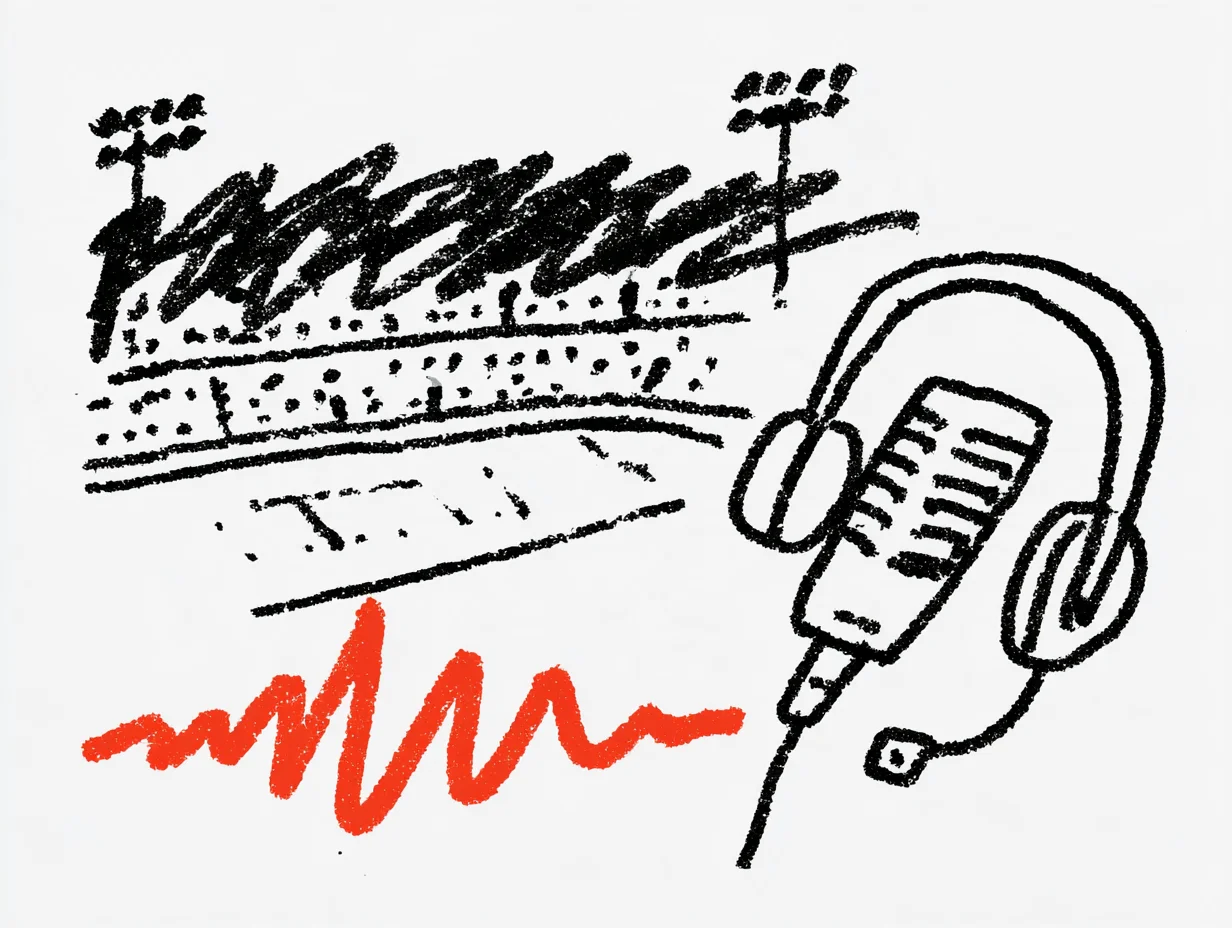
🏟️ STEP 1. Isolating Commentary from the Roar of Tens of Thousands (Audio Separation)
The noise levels at stadiums like Jamsil or Sajik are beyond imagination. A single hit triggers a massive roar and amplified cheer songs that instantly swallow the broadcast booth.
Separating Live Noise from Voice: When the caster's excited shouting mixes with cheering songs, standard AI Speech-to-Text (STT) simply dismisses it as 'noise' and stops translating. To prevent this, technology that cleanly separates live background sounds (cheers, amps, crowd noise) from human voices in real-time, right before the AI begins translating, is absolutely essential.
Direct Line-in: Instead of re-recording sound coming out of a speaker via an external microphone, the clean original audio passing through the broadcast mixer must be plugged directly into the AI system. This is the only way the AI can accurately analyze even the subtle tremors and breaths of the commentator without missing a beat.
📖 STEP 2. How to Translate a '6-4-3 Double Play'? (KBO-Customized Glossary)
Baseball is a sport notably packed with slang and specialized jargon. If the AI literally translates phrases like '6-4-3 double play', 'three-foot line violation', or 'changeup' into bizarre common nouns, the viewer's immersion is immediately broken.
Pre-training is Mandatory: For the game to flow smoothly, the AI needs to study baseball beforehand. The daily starting rosters for both teams, the English names of foreign players, and key KBO tactical terms must be configured in the system to prevent absurd mistranslations.
Preparing for Unexpected Situations: The names of rookie pinch-hitters or the complex rules during a video replay review are also predefined in the system. Even if the commentators speak faster or slur their words slightly during crucial moments, the key is for the AI to understand perfectly and convert it into the correct baseball terminology.

🎭 STEP 3. Dubbing 'Emotion' Beyond Text (AI Emotional Voice)
If you've successfully displayed fast and accurate translated subtitles, the final challenge is breathing 'life' into the experience for overseas fans watching behind the screen. It would be a huge letdown if a come-from-behind grand slam was hit, and fans had to furiously read the subtitles at the bottom.
No More Stiff Robotic Voices (TTS): The Text-to-Speech (TTS) features of generic subtitle solutions maintain a flat tone, much like a GPS navigation system. They completely fail to capture the explosive shouting or the urgency of the commentators.
Dubbing that Replicates Even the Breath: We are now in an era that goes beyond simple translation; it captures the original speaker's talking speed, vocal tone, and even the intensity of their shouting in real-time, dubbing it into the target language. By using a solution specialized in audio intelligence like Hudson AI's Hudson LIVE, international viewers can fully immerse themselves in the game, listening to thrilling commentary in their native language without being tied down by text.
🏆 A 'True' KBO Live Broadcast Uniting Global Fans
A well-crafted global sports broadcast goes far beyond merely translating 'strike' and 'ball.' Fans on the opposite side of the globe should be able to scream and go wild at the exact same moment as the fans attending the game in person at Jamsil Stadium.
The era where language barriers forced viewers to stare only at the text at the bottom of the screen is over. Together with Hudson LIVE, which vividly delivers the fiery passion of the field and the commentators' sincerity in native voice audio, make the hearts of KBO fans worldwide beat as one.
🔍 Further Reading
🎙️ Global OTT Sports Broadcasting: 'Live Dubbing' Instead of 'Subtitles'? : Analyzes the limitations of subtitles that disrupt sports screen immersion and the possibilities of AI live dubbing.
🤖 Simultaneous Interpretation vs. AI Real-Time Interpretation: What's the Difference? : Compares human interpretation and AI interpretation based on speed, emotional delivery, cost, and language scalability.
🔍 Real-Time Interpretation Solution Comparison: Eventcat, Flitto Live vs. Hudson Live : Explore the features and operational structures to check when choosing a solution in an actual live environment.
Run your next event without booths or receivers
Tell us your event name, dates, expected headcount, and target languages, and our team will put together the plan that fits.