
Translating the Shouts of Commentators: AI Interpretation Secrets from Japan's J SPORTS
Based on the case of J SPORTS, Japan's leading sports broadcasting network, this article reveals a 3-step AI live translation framework for multilingual broadcasts. Learn how to transmit not just game rules and stats, but the explosive emotion and excitement of sports commentators to a global audience.
- If a commentator's explosive shouting evaporates into a single, dry line of foreign subtitles, how can we possibly deliver the "thrill" that brings sports broadcasts to life?
- J SPORTS, Japan's largest sports broadcasting network, faced this exact dilemma, hitting a massive "barrier of emotion" when expanding their global reach.
- Discover their innovative breakthrough that goes far beyond simple text translation, perfectly synchronizing the stadium's heat and the commentators' breathless excitement for fans worldwide.

"Sayonara Home Run! It's out of here! A dramatic walk-off victory!"
Japan's passionate, high-tension sports commentary is an iconic part of the viewing experience. However, when J SPORTS—Japan's largest specialized sports broadcasting network—attempted to broadcast domestic leagues to a global audience, it hit a massive wall. The moment a commentator burst into excitement, overseas fans received only a single line of dry, robotic text: *"He hit a game-winning home run."* The electric stadium atmosphere and the commentator's intense energy completely evaporated through standard translation engines.
With the globalization of sports media rights, multilingual broadcasting has become essential, leading to a surge in AI real-time translation adoption. Yet sports production environments are far more demanding than corporate conferences. To deliver true live broadcasting, solutions must penetrate overlapping voices and loud stadium noise to transmit pure *emotion* across language barriers.
Based on the technical challenges and audio optimization strategies faced by J SPORTS, here is the breakdown of the 3-STEP AI Live Interpretation Framework designed to synchronize the heartbeats of global sports fans.
🏟️ STEP 1. Taming Loud Stadium Noise: Mic Input & Audio Separation
Major sports broadcasts—such as Nippon Professional Baseball (NPB) or Super Formula racing—are chaotic acoustic environments. The instant a pitcher records a strikeout or a racecar rounds a hairpin curve, stadium loudspeakers, roaring crowds, and engine noise exceed 100 dB.
- Separating Stadium Noise from Commentary: When high-energy commentary mixes with background noise, standard AI Speech-to-Text (STT) engines misinterpret the audio as noise and freeze up. To prevent this, an Audio Separation pipeline must be deployed at the front end to isolate vocal tracks from ambient sounds (BGM, crowd noise) in real time.
- Direct Line-in Integration: Feeding the commentator's microphone signal directly into the AI processing hardware via a broadcast mixer (Line-in) is mandatory for error-free STT. Capturing a clean, direct feed allows the AI to accurately analyze subtle vocal tremors, breathing, and pitch shifts.
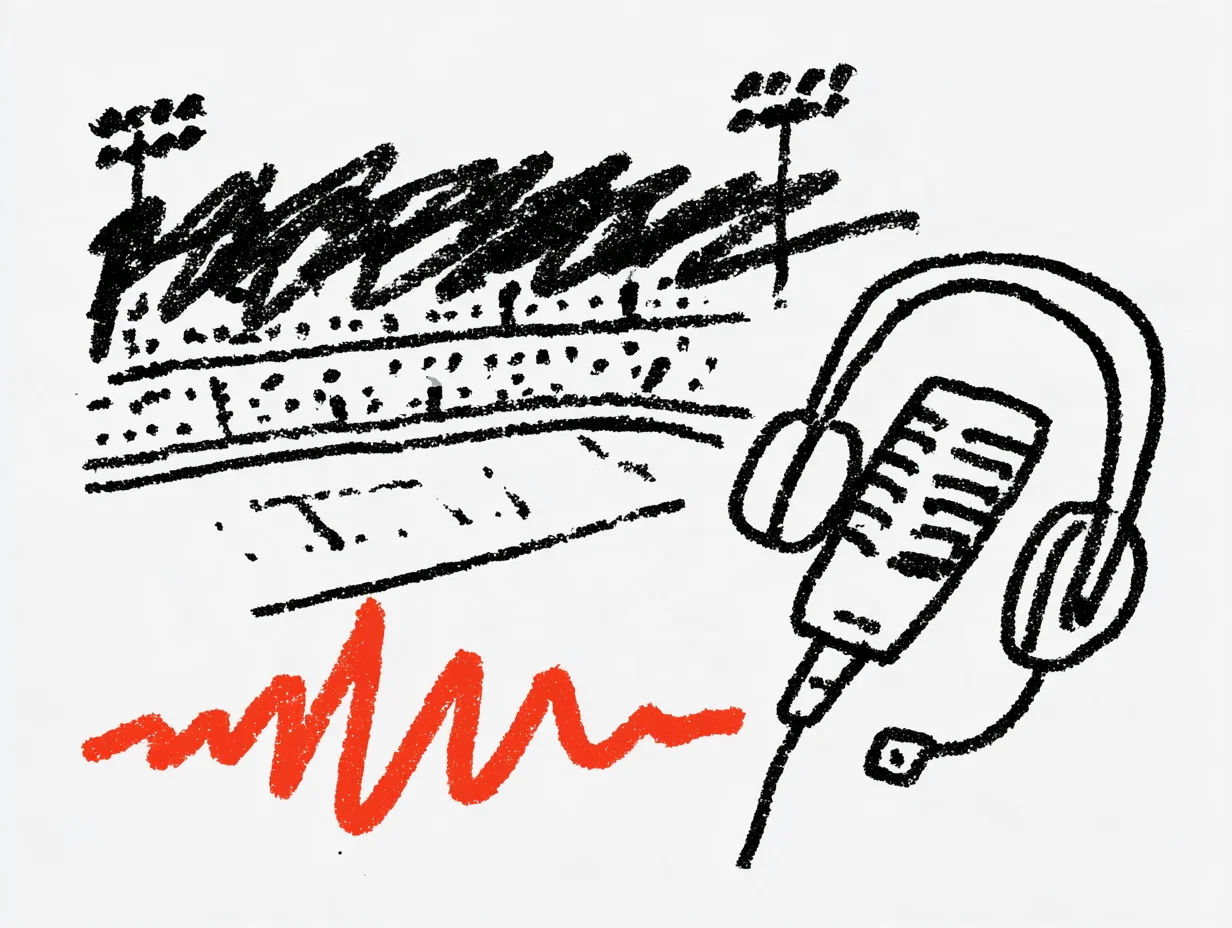
📖 STEP 2. Protecting Split-Second Immersion with Custom Glossaries
Covering diverse sports—from Tour de France cycling to rugby and baseball— J SPORTS faced another challenge: industry-specific jargon. If a commentator excitedly yells specialized terms like *"Peloton"* or *"6-4-3 double play"*, literal translations break the viewer's immersion instantly.
- Metadata Pre-Learning: To maintain broadcast flow, thorough dataset ingestion is required before kickoff. Rosters, player name pronunciations, and season-specific tactical glossaries should be loaded into the AI model in advance to eliminate subtitling errors.
- Defending Against On-the-Fly Errors: Pre-defining substitute player names or complex local league rules in the system ensures that even when fast-paced speech blurs pronunciation, the AI accurately maps terms to the target language without losing tension.
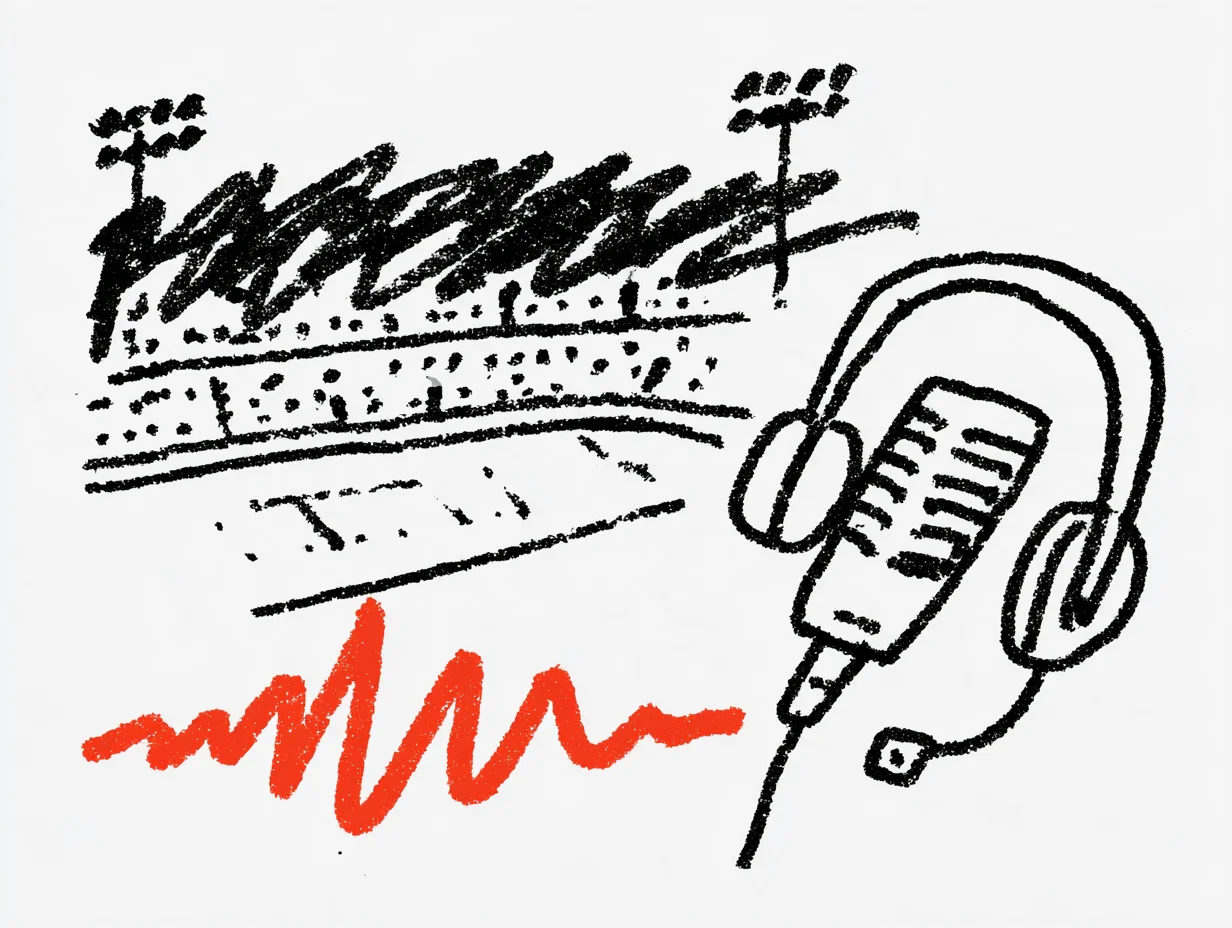
🎭 STEP 3. Beyond Text: Emotion-Matched AI Voices
Once precise, low-latency subtitles are established, the final milestone is animating the audio experience for fans off-site. In fast-paced sports, forcing viewers to constantly read subtitles at the bottom of the screen means they miss critical action on the field.
- Overcoming Robotic TTS Limitations: Standard Text-to-Speech (TTS) tools maintain a flat, monotone delivery resembling navigation prompts. This completely fails to capture key turning points or intense commentator shouting.
- Audio Tech That Translates Emotion: Advanced solutions like Hudson Live by Hudson AI analyze the speaker's cadence, pitch variations, and shouting intensity in real time. This emotion profile is seamlessly overlaid onto target-language AI voice dubbing, delivering authentic, broadcast-grade emotional synchronization.
With this setup, fans remain locked onto the action on-screen while listening to localized, high-energy commentary in their native language.

🏆 Conclusion: Real Live Streaming That Unites Global Fans
Successful global sports broadcasting goes beyond explaining game rules. True live production allows fans on the opposite side of the planet to cheer and react in exact sync with the crowd inside the stadium.
It is time to move past one-dimensional broadcasts where international viewers are glued to text captions. Upgrade your coverage with Hudson LIVE, delivering raw stadium heat and commentator energy directly into native multi-audio feeds to ignite fans worldwide.
🔍 Further Reading
- 🎙️ Global OTT Live Sports: Is “Real-Time Dubbing” Replacing “Subtitles”?: Examine how subtitles can disrupt sports-viewing immersion and why AI-powered real-time dubbing is emerging as an alternative.
- 🤖 Simultaneous Interpretation vs. AI Real-Time Interpretation: What’s the Difference?: Compare human and AI interpretation in terms of speed, emotional delivery, cost, and language scalability.
- 🔍 Real-Time Interpretation Solutions Comparison: EventCAT, Flitto Live vs. Hudson Live: Review the features and operational structures to consider when choosing a solution for a live environment.
Run your next event without booths or receivers
Tell us your event name, dates, expected headcount, and target languages, and our team will put together the plan that fits.