
The 200-Pax Trap: Why Consumer AI Fails at Large-Scale MICE Events
A growing number of MICE event organizers are running into serious problems after adopting personal translation apps to cut costs. This article explains how to distinguish purpose-built B2B AI media technology from consumer apps, focusing on multi-user connectivity, audio routing, and the handling of names and specialist terminology.
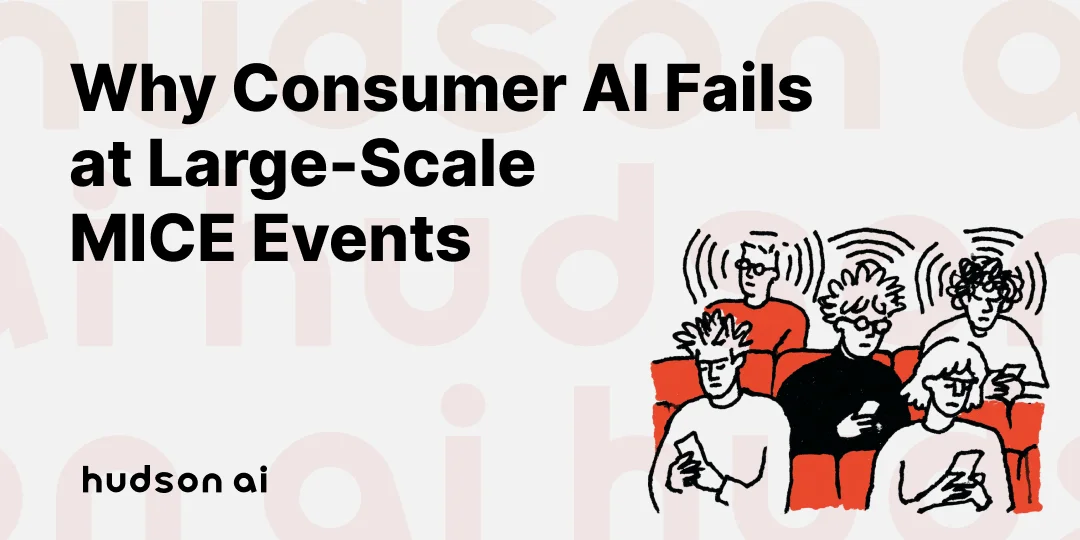
- What costly mistake turned a 200-person global VIP event into chaos in just five minutes—all in an attempt to save money?
- Discover the technical reasons why popular translation apps that work beautifully in everyday life can struggle with audio and stop responding at large venues.
- Explore a new interpretation pipeline that serves hundreds of international attendees without spending tens of millions of won on equipment rentals.
At a VIP product launch attended by 200 international buyers, the project manager faces a tight budget and proposes a bold idea.

“Let’s cut the interpretation booths and receiver rentals. Attendees can just use Papago or Google Translate on their phones. AI translation is pretty good these days.”
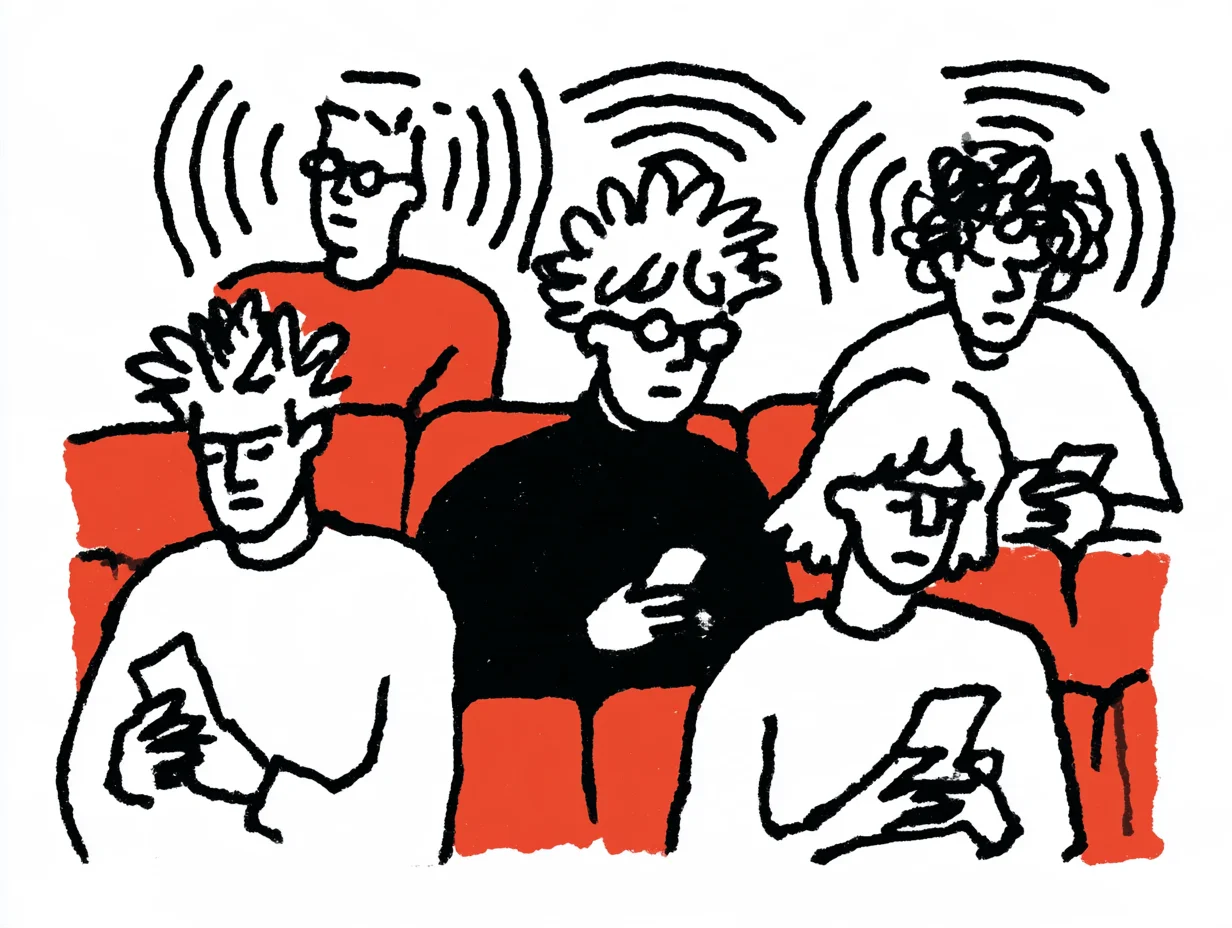
The result? Just five minutes into the event, the venue descends into chaos.
Echoes from the PA system prevent the apps from picking up the speaker’s voice reliably. Meanwhile, background chatter gets transcribed and displayed alongside the presentation. To make matters worse, 200 attendees connect to the venue’s Wi-Fi at once, overwhelming the network and bringing translation to a complete halt.
Translation apps have certainly become effective tools for everyday conversations and small meetings. But MICE events—with powerful PA systems and hundreds of attendees—present an entirely different set of technical demands. Here, we examine why travel-oriented AI tools and small-meeting apps can struggle at a 200-person international event, and how purpose-built B2B solutions address those challenges.

💥 Three Reasons Everyday AI Tools Struggle at Large Events
Planning a large event means accounting for physical and technical constraints that are easy to overlook.
- Personal translation apps are designed primarily to capture someone speaking directly near a smartphone. At a large venue, amplified speech mixes with reverberation and the background noise of hundreds of people. When a phone’s microphone captures that mixture, AI can struggle even to identify where a sentence begins and ends. Recognition accuracy can drop below 10%.
- Services built for small-group conversations may handle chat-style meetings with 10–20 participants comfortably. But when more than 200 attendees begin accessing live audio streams at the same time, infrastructure that was not designed for that load can struggle. The result is significant audio lag, sometimes lasting several seconds, along with frequent interruptions.
- General-purpose AI may mistake a new product name, industry jargon, or a VIP’s name for an unrelated everyday word. If those errors appear live on a large screen, they can seriously undermine the brand’s credibility.
💡 AI Interpretation Built for B2B Events Starts with a Different Architecture
B2B media technology solutions such as Hudson Live use a dedicated pipeline designed to address these on-site challenges.
- Direct Integration with the Audio Console : Instead of using smartphones to capture sound from across the room, the system takes the speaker’s audio feed directly from the venue’s audio console, or mixer, and sends it to the cloud. Feeding the engine a clean source signal minimizes interference from room noise and supports reliable speech recognition—even in a busy venue.
- Ultra-Low-Latency CDN Streaming with No App Installation : Attendees do not need to download an app. They simply scan the QR code on their table and listen to interpretation directly in their smartphone browser. A global edge CDN distributes audio to thousands of concurrent listeners, with latency of less than 0.6 seconds.
- Custom Terminology Preparation and Live Corrections : Presentation materials are provided to the AI before the event to help it recognize specialist terminology, raising terminology recognition accuracy to as high as 99%. If a translation error occurs, an operator can immediately edit or remove the text through a live dashboard, providing a human-in-the-loop safeguard.

📈 How Smart MICE Solutions Transform Event Operations
An AI interpretation solution built for events does more than introduce an impressive piece of technology. It makes the event itself more efficient.
- Reduce Costs and Support ESG Goals: Eliminate interpretation booth installation costs, receiver rentals, and charges for lost devices. Attendees use their own smartphones, reducing the need for dedicated hardware and supporting a lower-waste event.
- Adapt to Changes in Attendance: If 100 more people arrive than expected, there is no need to scramble for extra receivers. Scalable streaming capacity helps deliver a consistent listening experience to every attendee.
- Archive Event Content Immediately: Once the event ends, presentation transcripts are automatically exported in multiple languages as SRT and DOCX files. A single export simplifies post-event reporting and video subtitling.
At a high-stakes business event with hundreds of attendees, interpretation is essential media infrastructure that can determine the event’s success.
Understanding the difference between general-purpose AI for one-to-one conversations and B2B media technology built for large-scale delivery is the first step toward planning a successful global event.

Planning a conference for 200 or more attendees?
From on-site audio integration to ultra-low-latency streaming, discover AI interpretation designed for large events. Request a free demo of Hudson Live today.
Run your next event without booths or receivers
Tell us your event name, dates, expected headcount, and target languages, and our team will put together the plan that fits.