
A Guide to Reducing Conference Interpretation Costs
What interpretation really costs at a large international event, and practical ways to cut the budget — from reusing equipment to AI real-time interpretation.
- Interpretation budgets for multilingual events snowball with every language you support and every attendee you add.
- The real cause of budget overruns is rarely interpreter fees — it is the hidden physical equipment costs: booth installs, hundreds of receiver rentals, and loss claims.
- This article takes apart a conventional interpretation invoice line by line and covers the most realistic way to strip out the equipment padding.
Reviewing the budget for an international conference, the interpretation line is often where the air leaves the room. "Millions of won for a single keynote session?" On a large multilingual event, the interpretation budget expands with every additional attendee and language until it takes up a large share of the total.
The reason is that the cost goes well beyond booking interpreters: soundproof booth installs, hundreds of receiver rentals and the loss management that comes with them, on-site labor — the invisible physical costs are the real driver of overruns. For a PCO or a corporate event lead, interpretation is both mandatory and the hardest cost black hole to control.
This article breaks down exactly where a traditional event interpretation budget leaks, item by item, and covers the realistic alternatives for stripping out the equipment padding and optimizing the total.

💸 Where does event interpretation money actually go?
For a large multilingual event, the interpretation budget is not simply "the price of booking people." It splits into two axes — labor and equipment and operations — and breaks down roughly as follows.
| Cost item | Unit price and basis (2026 industry averages) | Why the budget climbs |
|---|---|---|
| Professional simultaneous interpreters | Roughly KRW 1M–2M+ (≈ USD 700–1,400) per language per day, in mandatory two-person teams | Rare languages command steep premiums; three languages means booking six interpreters |
| Interpretation booth install | Roughly KRW 500K–1M (≈ USD 350–700) per booth, install and teardown included | Every additional language requires another physical booth |
| FM receiver rental | Roughly KRW 5,000–10,000 (≈ USD 3.50–7) per unit, one per attendee | Scales directly with headcount — enormous at large sessions |
| Operations and labor | Day rates for on-site audio engineers and receiver distribution/collection staff | Staff must be present to set up equipment and prevent receiver loss |
| Hidden risk costs | Replacement charges for lost or damaged receivers (hundreds of dollars a unit) | Unexpected invoices land after the event is over |
Put simply, event interpretation costs explode the moment you add people or languages. Growing from 100 to 500 attendees multiplies receiver rental fivefold. Supporting just three languages — say English, Chinese, and Japanese — puts six interpreters and three full-size soundproof booths in the room. A modest increase in event scale is all it takes for interpretation to swallow the budget.
💡 Three ways to put your interpretation budget on a diet
Even without overhauling how you run the event, there are practical optimizations that stop the leaks inside a conventional on-site interpretation setup.
- Make receivers reservation-only: Renting one receiver per registered attendee is straightforward waste. Ask "do you need an interpretation receiver?" as a required question at registration, and rent to roughly 110% of actual demand to hold the fixed cost down.
- Use relay interpretation: For a session moving between, say, Korean, English, and Japanese, setting up a relay through English as the pivot language — instead of staffing every language pair — sharply reduces both interpreter headcount and booth space.
- Control languages in breakout sessions: Support every language for the keynote, but cap the parallel breakout tracks at two channels — the presenter's primary language plus English — to avoid paying for a booth split in every room.
🤖 AI real-time interpretation: a different budget model
When equipment optimization alone hits its ceiling, the alternative large event organizers are actively turning to is AI real-time interpretation on a BYOD (Bring Your Own Device) basis.
An AI interpretation solution takes the podium mic feed to the cloud, translates it in real time, and pushes audio and subtitles to each attendee's own smartphone. That removes the traditional equipment cost structure that inflates the budget in the first place.
| Category | 📻 Traditional (people + hardware) | 📱 AI real-time interpretation (software + BYOD) |
|---|---|---|
| Base cost model | Languages × interpreter fees + attendees × receiver cost | Solution fee (flat, by term or by session) |
| Cost to add a language | Two more interpreters and another booth (millions of won) | Dozens of languages at once, one click, no incremental cost |
| Cost as attendance grows | More receivers to rent, loss risk rising sharply | Unlimited attendees on their own phones (zero added equipment cost) |
| Space and overheads | Booth floor space, engineers, distribution staff | One audio line from the podium and setup is done — no physical constraints |
| Use of data | Evaporates when the event ends | Multilingual transcripts, summaries, and subtitle text saved automatically |
For a 1,000-person event supporting three languages, the traditional route runs to tens of millions of won, while AI real-time interpretation covers it with the solution licence alone — commonly cutting 50–70% or more from the total interpretation budget. Beyond the savings, the biggest practical gain is that the on-site staff effort previously spent on receiver rental and loss management disappears entirely.
💡 Human or AI? Matching the interpretation method to the session
Not every session at a large conference carries the same risk or the same character. The key to optimizing budget and operations is to vary the interpretation method by session against three criteria: how costly a mistranslation would be, how complex the speech is, and what the physical constraints are.
1. Sessions where AI real-time interpretation is the efficient choice
Best suited to sessions with a predictable presentation structure, difficult physical setup, or high demand for languages against a limited per-session budget.
Multi-track breakout sessions running in parallel
- Why: Breakout sessions running simultaneously across four or five mid-size rooms rarely have the floor space for soundproof booths, and building one per room multiplies the equipment bill.
- Why it works: AI interpretation takes no physical space, so dozens of languages can be extended to every breakout track at once. For academic and technical talks, pre-loading the deck and a glossary keeps transcription of proper nouns reliably accurate.
High-traffic exhibition booths and open stages
- Why: On an open stage where an unpredictable crowd comes and goes freely, headcount cannot be forecast, which makes handing out and recovering receivers unworkable.
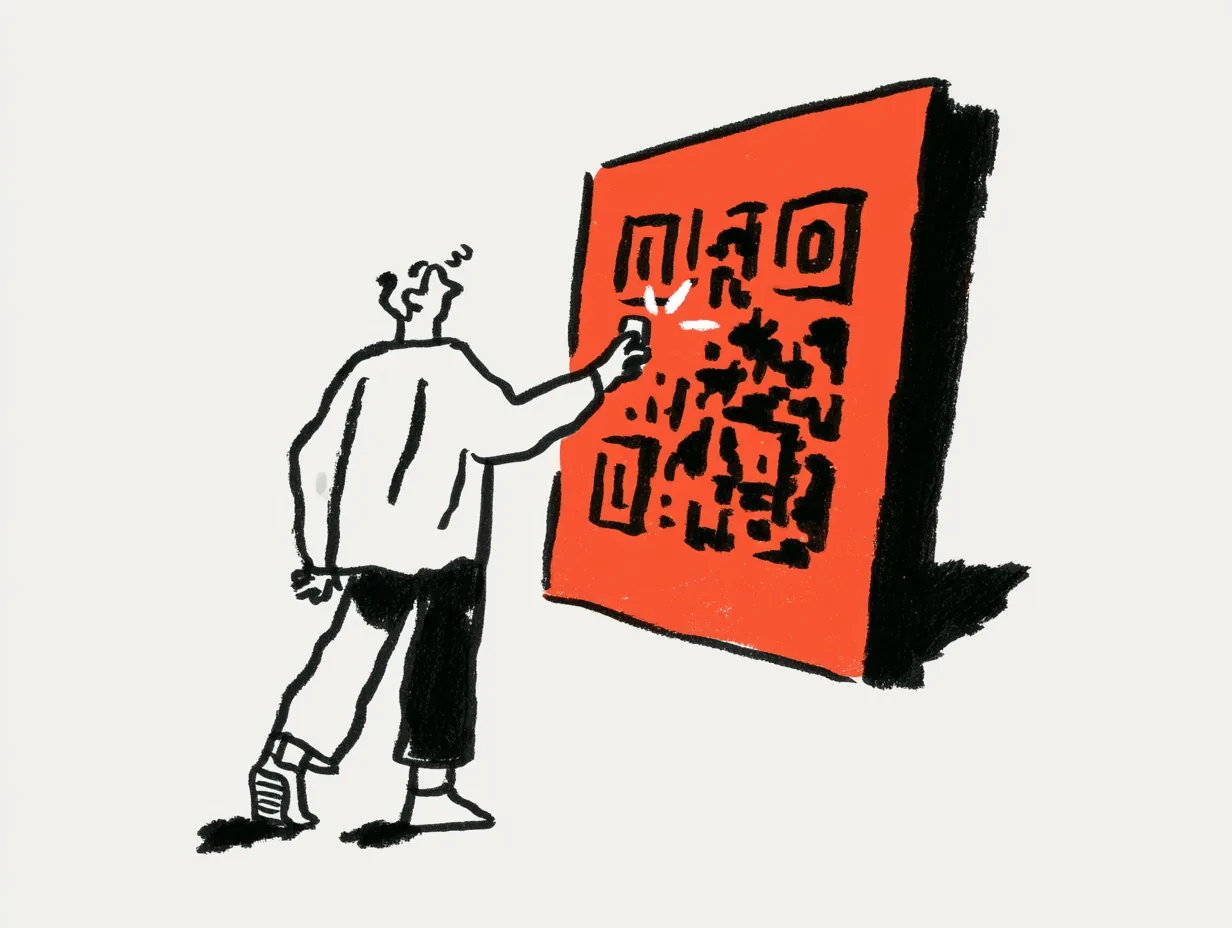
- Why it works: Visitors scan a QR code on their own phone, so equipment management drops to zero, and the same feed applies to both the on-site audience and the online stream.
Networking parties and side events with a mixed-language crowd
- Why: Welcome receptions and networking sessions mix five to ten or more nationalities, but a heavy interpretation booth suits neither the atmosphere nor the sub-budget.
- Why it works: A single channel supports dozens of languages at once, delivering multilingual access within a limited secondary budget.
2. Sessions that require a professional human interpreter
High-stakes sessions where a single mistranslated word carries serious business or diplomatic consequences, or where human judgment and emotional mediation are part of the job.
Government VIP and CEO keynotes and formal opening ceremonies
- Why: These are the settings where an institution's official position or a company's major vision is announced, and a single word or shift in tone feeds straight into press coverage, share prices, and diplomatic fallout.
- Why it matters: The rhetorical register of a keynote, the formal style, and the flexibility to handle whatever happens on stage still demand the refined judgment of a veteran simultaneous interpreter.
Unscripted Q&A and fast-moving panel discussions
- Why: Overlapping speech, jokes, irony, and rapid back-and-forth are exactly where current machine learning is weakest.
- Why it matters: An interpreter reads the intent behind a remark in the moment and smooths tone to prevent cultural misunderstanding, which is what keeps the discussion flowing.
Confidential contract negotiations and legal dispute mediation
- Why: A system cannot recognize its own mistranslation and will output it as-is, creating critical risk around things like the reading of a contract clause.
- Why it matters: An interpreter can self-correct immediately, and sessions demanding confidentiality and highly calibrated diplomatic phrasing should be handled by a human interpreter alone.

❓ Frequently asked questions
Q. Will the server or the venue network hold up if a large crowd connects by phone at once?
A. Streaming audio and text requires far less data than video, and works comfortably over ordinary LTE/5G. That said, for a large hall packing 1,000+ people into a confined space, the basic precaution still applies: ask the carrier for a mobile base station ahead of the event to keep the venue network healthy.
Q. Is the interpretation quality good enough for a major event?
A. For a typical industry conference talk, the quality is strong. Accuracy rises sharply — close to professional-interpreter level — when the speaker's deck, company names, and industry terminology are registered in the system's glossary before the event.
Q. Many of our attendees are older. Is a smartphone-based approach still workable?
A. The barrier to entry is low, since joining takes a QR scan and no app install. As a safeguard, keep a small stock of inexpensive wired earbuds and adapters at the information desk and staff a help line to assist with joining — it still runs far more smoothly than distributing receivers.
Q. What does it mean that the event leaves a record?
A. With traditional interpretation, the speaker's words disperse into the air. AI interpretation saves the room's speech and its multilingual translations as a transcript, which dramatically reduces the time and cost of writing press releases, producing VOD subtitles, and compiling post-event reports.
🏃 Next step: finding the right fit for your event
Ready to leave behind the outdated interpretation-equipment habits that blow up the budget, and run an event that costs less while giving attendees a better experience?
If you'd like to bring the mobile AI real-time interpretation covered here to your next large event, take a look at Hudson AI Live. Share your event name, dates, expected headcount, and target languages, and our team will come back with the projected savings and the operating plan that fits.

🔍 Further Reading
- 📱 How to Run an International Event Without Interpretation Booths or Receivers: Explore how BYOD enables multilingual events without interpretation booths or dedicated receivers.
- ✅ 10 Must-Ask Questions Before Hiring a Conference Interpretation Provider: Identify the technical and operational requirements that are easy to overlook when choosing a provider based solely on price.
- ♻️ Turn One Event into Lasting Global Content×: Learn how to repurpose event videos and translation assets to improve the marketing ROI of a one-time event.
Run your next event without booths or receivers
Tell us your event name, dates, expected headcount, and target languages, and our team will put together the plan that fits.